





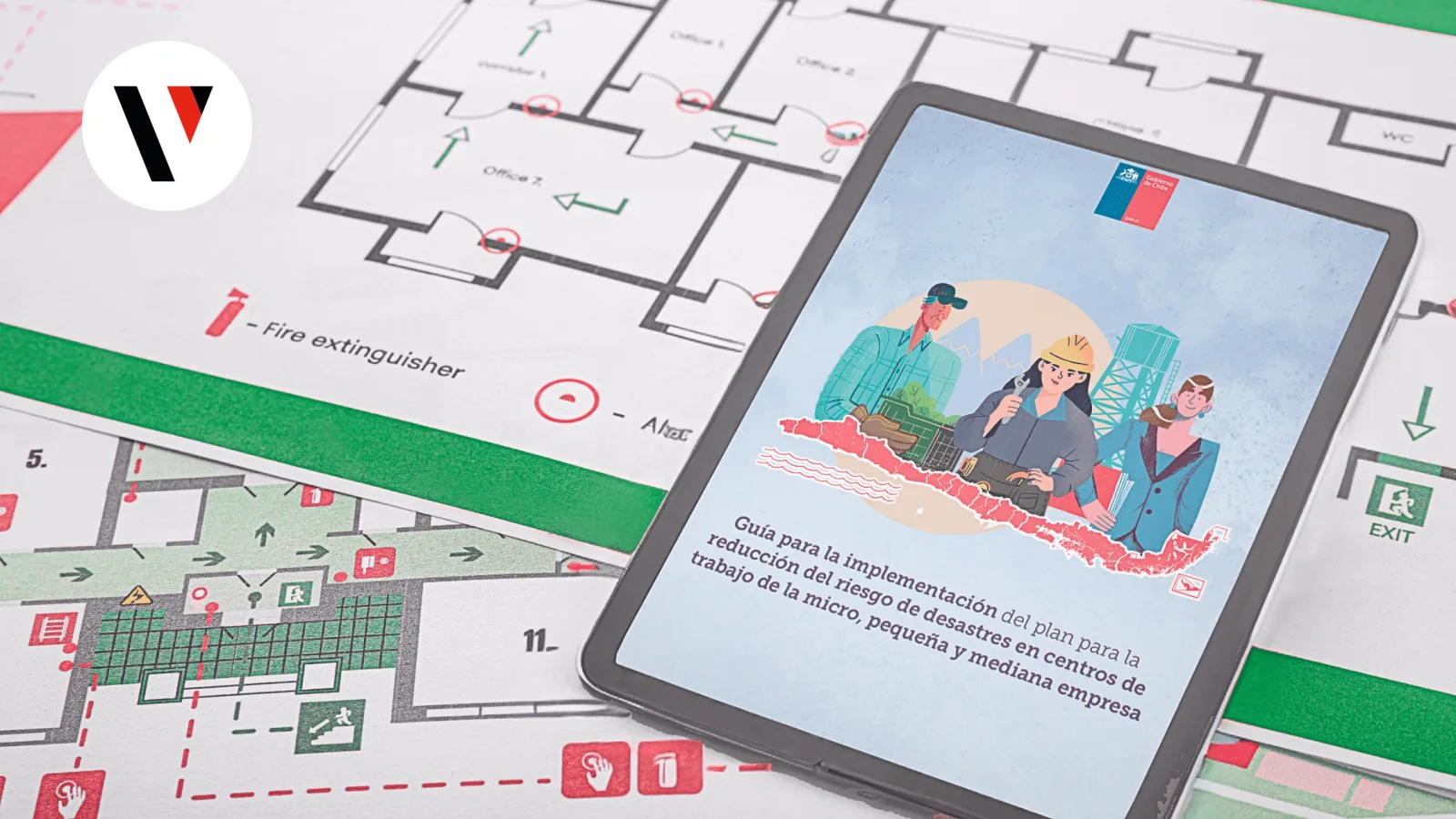
 Micro, small and medium-sized enterprises (MSMEs) must also have a disaster risk reduction plan, in which communication plays a key role. Entrusting this to a platform like VIPER MASS ensures effectiveness that goes beyond regulatory compliance.
When it comes to emergency safety, Chilean regulations do not only cover large companies. Micro, small and medium-sized enterprises must also meet the requirements of the law, which essentially calls on them to have a Disaster Risk Reduction Plan for Workplaces.
The Undersecretariat of Social Security is clear on this point and has published a technical guide for drawing up this protocol, which sets out each employer’s obligation to protect the life and health of their employees. This applies both to basic hygiene and safety conditions, so people can do their jobs normally, and to actions aimed at preventing accidents or emergencies.
Compliance is monitored by the Undersecretariat itself and by Senapred (Chile’s national disaster prevention and response service), which, under threat of fines, ensure that safety measures, protocols and emergency plans are properly implemented.
The pillars of the emergency plan
The plan required by the guide for implementing the disaster risk reduction plan in the workplaces of MSMEs (in Spanish) can be summarized in three pillars:
- The first is the risk assessment stage, that is, identifying each company’s threats and vulnerabilities by analyzing the location of its operations, the condition of its facilities and its distance from emergency services.
- The second pillar is organizing preventive actions, in other words, designing measures to mitigate the risks. This can range from protocols and evacuation routes to aspects as important as deciding which communication channels will be used to report an emergency.
This point is especially relevant given that the Labor Code states that the authorities can order the evacuation of premises in the event of a disaster. In that case, the employer must immediately suspend work and evacuate, and it is precisely in cases like these that a mass alert tool is needed to inform and mobilize staff in a short time.
- Along these lines, the third pillar emphasizes the need to develop a collaborative approach in which all parties involved, both inside and outside the company, work together cohesively during a critical situation.
Solutions that go beyond compliance
Along with drawing up the emergency plan, it is advisable to have an emergency mass notification system such as VIPER MASS. This system lets you send alerts to employees about imminent emergencies, ensuring that critical information reaches everyone involved quickly and effectively. This not only meets legal requirements but also ensures safety and well-being during critical situations.
The pillars mentioned above, on which the guide for implementing the mandatory emergency plan is based, cover areas we can manage with our platform, since it makes it easier to coordinate everyone involved in an emergency.
Implementing VIPER MASS is therefore not just a compliance measure for MSMEs, but a comprehensive strategy to strengthen emergency response and protect any company’s most valuable asset: its people.