





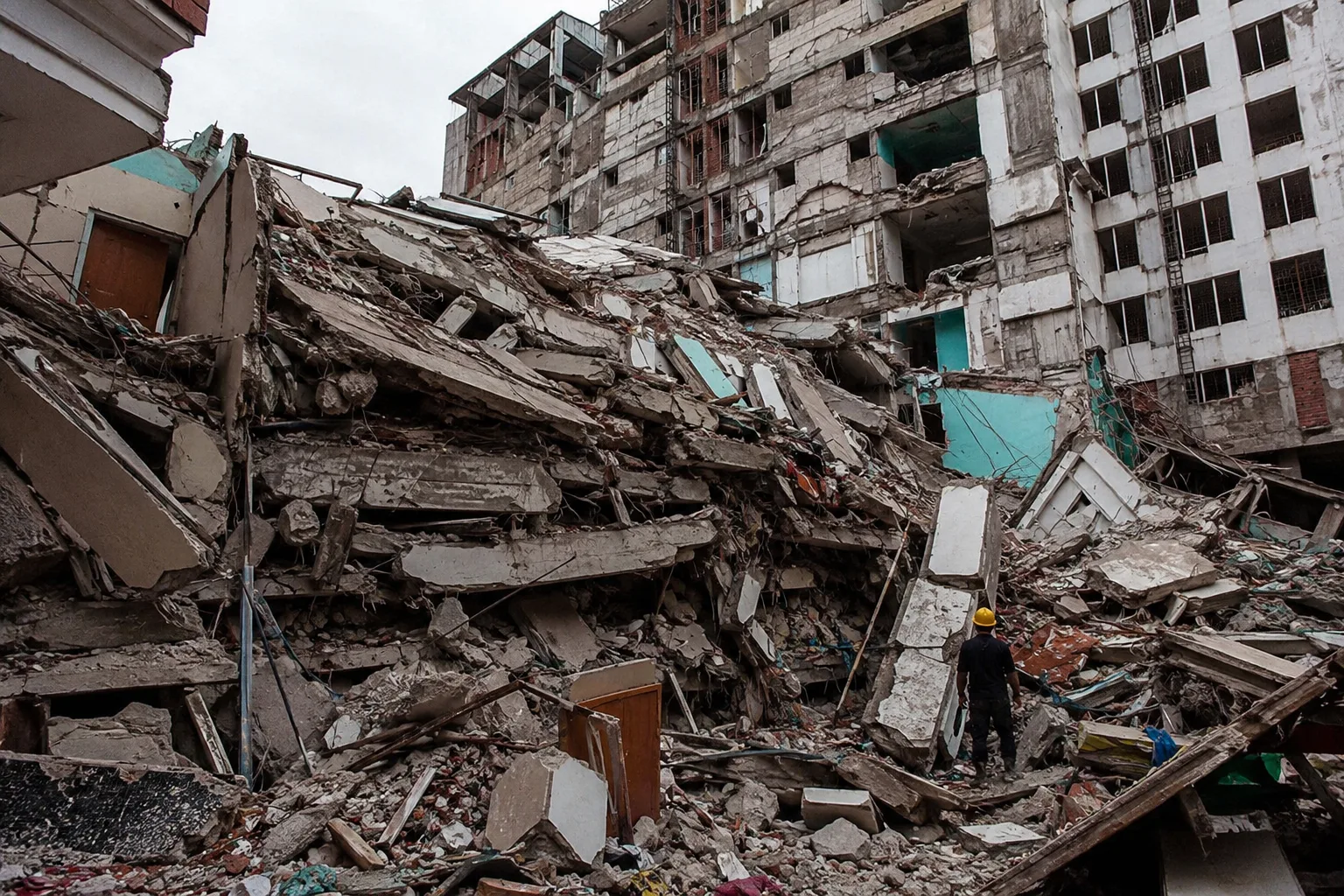
During recent weeks, different earthquakes recorded in Venezuela, Japan, Afghanistan and Mexico once again demonstrated that a catastrophe can alter, in seconds, the lives of thousands of people.
Although each emergency occurs in a different context, they all leave the same lesson: Preparation, communication and responsiveness can significantly reduce its consequences.
Risk is managed before the emergency
An earthquake is a natural phenomenon, but its impact depends on factors such as the quality of infrastructure, the preparedness of communities, the continuity of critical services, and the ability of organizations to respond.
Therefore, Disaster Risk Management does not begin when the emergency occurs. Start earlier, identifying threats, reducing vulnerabilities, training people and developing clear action protocols.
The question should not only be: “What will we do if a catastrophe occurs?”, but also: “What are we doing today to lessen its impact?”
Detecting a threat is not enough
Monitoring systems can identify a hazard, but that information only protects lives when it is quickly transformed into clear, actionable instruction.
An alert cannot remain stuck in a control room, in an unread email, or in an informal messaging group. It must reach the right people, through the right channels and within the time available to react.
The importance of multichannel communication
During an emergency, no channel is completely foolproof.The networks pThey may become congested, the internet may be interrupted, and some people may not hear a siren or check email. electronic.
Therefore, a Emergency Mass Notification System, EMNS, allows you to send alerts simultaneously through different channels, such as WhatsApp, SMS, phone calls, email and mobile applications.
Multichannel increases the possibilities of contact and allows messages to be adapted to collaborators, brigade members, authorities, operational teams, suppliers and nearby communities.
Notifying is not the same as managing
Sending an alert is just the beginning.During a disaster, organizations need to know who received the message, who confirmed they are safe, which facilities are damaged, which people require assistance, and which protocols have already been activated.A mass notification platform must provide traceability, receipt confirmations, activation records and reports in real time. This information allows you to make better decisions, coordinate resources and subsequently evaluate the effectiveness of the response..
Messages must be prepared
In the middle of an earthquake there is no time to decide who will write the alert, what channel to use or who will be authorized to send it. The messages must be previously defined for different scenarios:
- 1- Initial alert.
- 2- Evacuation.
- 3 -Confirmation of the status of the people.
- 4 -Activation of emergency equipment.
- 5 -Operational continuity.
- 6 -Later updates.
7 -There must also be main managers, substitutes and clearly established escalation protocols.
Prepare for the consequences
The first seismic movement does not always represent the end of the emergency.
After an earthquake, aftershocks, fires, gas leaks, landslides, electrical outages, telecommunications failures, and progressive damage to structures can occur.
Therefore, communication must be maintained before, during and after the event, providing clear information as conditions evolve.
Technology and human preparation
Technology can speed up an activation, automate processes and deliver information in real time. However, it is not a substitute for leadership, training, or protocols. An EMNS is really effective when integrated with:
- Updated risk maps.
- Segmented contact bases.
- Clearly defined responsibilities.
- Pre-prepared messages.
- Periodic drills.
- Escalation protocols.
- Data-driven post-assessments.
A look from experience
"A catastrophe shows that the response cannot depend on improvisation. Technology has value when it manages to connect information, people and decisions at the right moment. Detecting a threat is essential, but we must also be able to communicate it, confirm that the message was received and coordinate a concrete action. Preparing before the emergency is a responsibility with people, with communities and with the continuity of our organizations."
Exequiel Gallardo, CEO and co-founder of VIPER
Actions that an organization can implement today
Every organization can begin by strengthening its preparation through concrete actions:
- 1-Identify your main risk scenarios.
- 2-Keep contact bases updated and segmented.
- 3-Define those responsible and substitutes to activate communications.
- 4-Prepare messages for different types of emergencies.
- 5-Use multiple communication channels.
- 6-Perform measurable drills.
- 7-Analyze the results and continually improve the protocols.
Preparing can change the outcome
We cannot prevent an earthquake from happening, but we can reduce its impact. Recent experience shows that the magnitude of a catastrophe depends not only on the strength of the phenomenon, but also on the level of preparation before it occurs.
At VIPER we believe that critical emergencies should not be faced with improvisation, but with preparation, information and technology. VIPER MASS allows critical information to be delivered to the right people, through multiple channels, in seconds and with total traceability.